Vous

Rayonnages à palettes

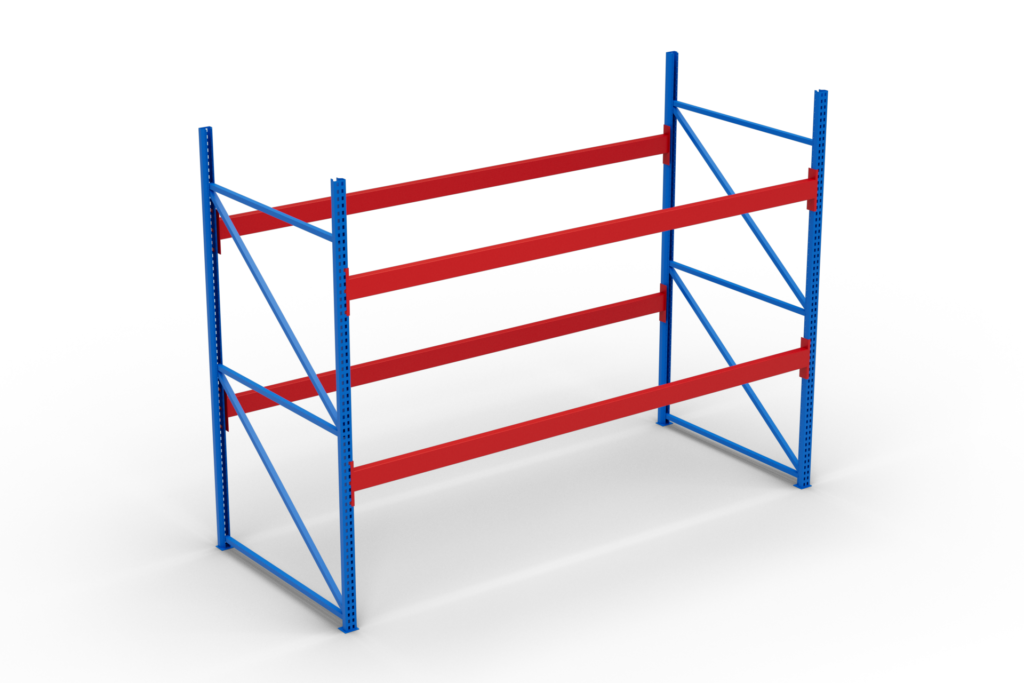
recherchez une solution solide, stable et fiable à long terme pour le rangement de vos outils, matériaux ou fournitures ? Notre gamme comprend des rayonnages en acier alliant une capacité de charge élevée, une structure en acier de qualité et une grande praticité dans n’importe quel espace. Le châssis soudé garantit une rigidité et une durabilité exceptionnelles, ce qui rend ces rayonnages idéaux pour les ateliers, les garages, les entrepôts, les caves et les conteneurs d’expédition. Ces rayonnages de stockage sont conçus pour supporter
sans difficulté
les manipulations quotidiennes, les charges lourdes et les conditions difficiles. Grâce à leur construction en acier de qualité, ils conservent leur stabilité, leur forme et leur fonctionnalité pendant de nombreuses années d’utilisation.

Les rayonnages à palettes sont aujourd’hui de plus en plus utilisés en dehors des entrepôts traditionnels. Ils sont notamment très prisés dans
les tentes de stockage,
les halls en voûte,
les conteneurs d’expédition, les ateliers et les garages. Un rayonnage à palettes de qualité permet de créer un système de stockage bien organisé, même dans des espaces réduits où chaque mètre compte.

Lors du choix, ce ne sont pas seulement la capacité de charge et les dimensions qui jouent un rôle important, mais également le prix des rayonnages à palettes eux-mêmes.
Vous ne savez pas quel rayonnage à palettes convient à votre espace ? Contactez-nous et nous serons ravis de vous aider à choisir une solution adaptée à votre type d’activité, à votre méthode de stockage et à la capacité de charge requise.

Foire aux questions

La capacité de charge dépend de la structure spécifique, du type de poutres et des dimensions. Un rayonnage à palettes standard supporte entre 500 et 1 500 kilogrammes par niveau. Les solutions professionnelles offrent souvent des capacités de charge comprises entre 2 000 et 4 500 kg par travée. Une répartition correcte du poids et un ancrage de qualité sont essentiels.

Le prix des rayonnages à palettes dépend de la hauteur, de la capacité de charge, du nombre de niveaux et du type de structure. Un rayonnage à palettes plus petit, destiné à un atelier ou à un garage, peut coûter nettement moins cher que les systèmes d’entreposage professionnels. Pour les projets de plus grande envergure, nous vous recommandons de prévoir une extension future de l’entrepôt, car les rayonnages à palettes modulaires peuvent facilement être agrandis.

Oui. Un rayonnage à palettes bien conçu permet également d’exploiter efficacement les petits espaces. Il est souvent utilisé, par exemple, dans
des conteneurs d’expédition, des petits entrepôts ou
des garages sous tente. L’avantage réside dans l’exploitation de la hauteur de l’espace, ce qui permet d’augmenter la capacité de stockage sans agrandir la surface au sol.

Dans la plupart des environnements professionnels, oui. L’ancrage renforce considérablement la stabilité et la sécurité.
Les rayonnages à palettes plus hauts ou soumis à des charges plus lourdes, en particulier, doivent être solidement ancrés au sol. Un revêtement de sol en PVC recyclé
peut également s’avérer utile, car il répartit mieux la charge et renforce la stabilité de la zone de stockage.

Un rayonnage à palettes de qualité durera de nombreuses années s’il est utilisé correctement.
Les rayonnages à palettes en acier sont très résistants aux dommages mécaniques et, à condition d’être inspectés régulièrement, peuvent supporter une utilisation quotidienne intensive. Dans de nombreux entrepôts, ils fonctionnent sans problème majeur pendant plus de 15 ans.

Oui, mais cela dépend de l’environnement spécifique. Si les rayonnages à palettes sont utilisés à l’extérieur, nous vous recommandons de les placer sous
des abris pour conteneurs d’expédition
ou dans un
hangar sous tente. La structure sera alors mieux protégée contre la pluie, les rayons UV et la corrosion.

Discover quality pallet racks
A quality pallet rack must handle high loads and daily handling while maintaining stability. That is why great emphasis is placed today on the strength of the steel, safety features and the versatility of the whole structure.
Modern pallet racks are designed to be easily extended as the warehouse or company grows. In practice this means you do not have to change the entire storage system. You simply add another pallet rack, beams or levels. A correctly laid-out pallet rack can speed up the handling of goods by 25% and simplify access and warehouse organisation. Pallet racks are used in large distribution centres, e-shops, production halls and tent halls.
Many customers compare not only the technical parameters, but also the price of pallet racks in relation to their service life. With a quality steel structure, it is often an investment for many years. The ability to adapt the pallet rack to the specific space and type of goods is also important.
High flexibility is another advantage. You can use a pallet rack to store building materials, tyres, machinery, feed, packaged goods or heavier components. This makes pallet racks suitable for small companies and large logistics operations alike.
Pallet racks: what are the advantages and disadvantages?
Pallet racks are among the most practical storage solutions, but here too it is important to know their strengths and weaknesses. The right choice has a major effect on warehouse efficiency and work safety.
Advantages of pallet racks

Efficient use of space: Pallet racks let you store goods vertically, increasing warehouse capacity without further construction.
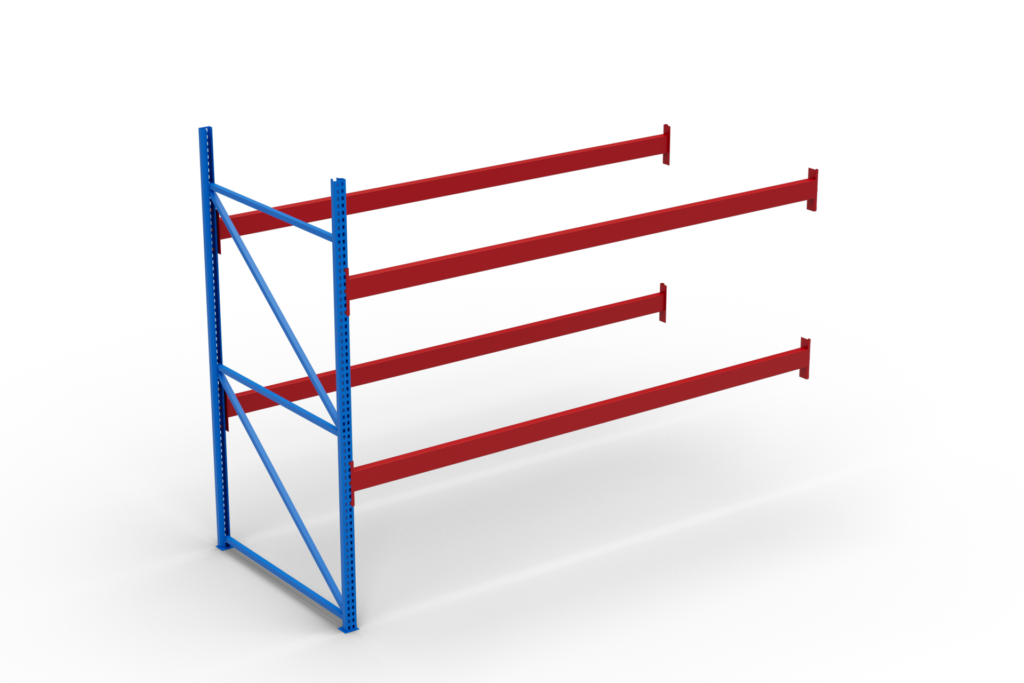
Modularity and easy extension: Every pallet rack can be extended as needed. If the company grows, you simply add another pallet rack or new levels.
High durability and load capacity: With correct anchoring, steel pallet racks cope with intensive operation and high loads.
Easier handling of goods: The advantage is quick access to pallets and easy handling with forklift equipment.
Better value for money: The price of pallet racks is an important factor. Compared with expanding the warehouse, it is often a significantly cheaper and more efficient solution.

Disadvantages of pallet racks

Load capacity must be observed: Incorrect weight distribution can overload individual levels and reduce stability.
Greater demands on handling space: In larger warehouses you need to allow room for forklift equipment and wider aisles.
Structural quality is decisive: A poor-quality or cheap pallet rack may not provide sufficient strength under higher loads.
Correct anchoring is important: An incorrectly anchored pallet rack can have lower stability and safety in daily use.

Pallet racks and their use in practice
Pallet racks are used today in dozens of different industries. It is important to adapt the specific pallet rack to the type of space and the way materials are handled.
Pallet racks for shipping containers and under a container shelter
Containers are often used today as practical storage spaces. A pallet rack helps make better use of the height of a shipping container and create a well-organised storage system. Pallet racks are suitable for 6-metre and 12-metre shipping containers and under a container shelter, which helps protect the stored material and the rack structure itself from rain and the weather.
Pallet racks for tent halls
A tent hall is a popular solution for companies that need to expand their storage capacity quickly. A quality pallet rack makes it possible to store goods, materials and machinery efficiently. Pallet racks are also often used in gable and arched halls, where they help organise storage and make use of the available space. In practice, these solutions are used mainly in logistics, agriculture and construction.
Pallet racks for tent garages
Even a smaller tent garage can work as a practical store. A pallet rack helps make better use of the space and create a system for storing tools, tyres or seasonal equipment. A smaller pallet rack is also often used in car workshops or for storing garden machinery. Correct weight distribution and a quality floor are important.
Pallet racks for workshops and garages
Workshops and garages are often crowded with materials and tools. Pallet racks can create order and improve the overview of the space. In our experience, customers in smaller operations particularly appreciate easy assembly and the option of combining a pallet rack with a shelving system. A pallet rack is also suitable for storing heavier components or building materials.
Pallet racks in large warehouses
In large logistics centres, the pallet rack is the absolute basis. Modern pallet racks make it possible to store thousands of pallets while maintaining fast handling. Pallet racks together with shelving units make up more than 85% of storage systems in large distribution warehouses. Safety, load capacity and the possibility of optimising space play an important role.
In larger operations, customers also often consider the price of pallet racks for an extensive warehouse project. In practice, however, a quality pallet rack can significantly reduce handling costs and the time needed to pick goods.
Why choose a pallet rack from Hagro?
A quality rack must be safe, sturdy and ready for daily operation. At Hagro we focus on solutions that make sense in practice, not just on paper. Customers most often look for a combination of load capacity, versatility and, above all, a realistic price for pallet racks. That is why we offer solutions suitable for small operations and large warehouses alike.
The advantage is the ability to adapt the pallet rack to a specific space. Whether it is a tent hall, a shipping container, a workshop or a large warehouse, correctly designed pallet racks can significantly improve the organisation and efficiency of work. Our range also includes shelving units and cantilever racks suitable for storing long or bulkier materials.
Our pallet racks are designed with an emphasis on stability, easy assembly and a long service life. Work safety, quality anchoring and the possibility of future extension also play an important role. If you are not sure what to choose, contact us or take a look at our projects. We will gladly advise you on designing a suitable solution according to the type of space, load capacity and intended use of your new warehouse.